


UIDP Chicago 2025 Event Materials
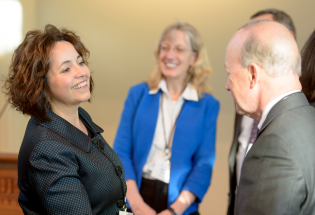
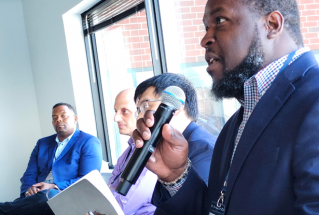
 UIDP Chicago was held Sept. 16-18, 2025, in Chicago. The conference convened speakers and attendees from university, industry, government, and philanthropic sectors. UIDP Chicago 2025 gave attendees an opportunity to gain insider perspectives on the current ecosystem, explore where university-industry partnerships are headed, and ensure that collaborations are positioned for long-term success, resilience, and impact—today and tomorrow.
Need a recap? Access the report and available presentations from the UIDP Chicago below, and bookmark this page to find new resources as they are added. Presentations were provided by speakers; content does not necessarily reflect UIDP policies or positions.
Sept.16, 2025
Exploring Subscription Models for Access to Research Assets and Technologies
Jilda Garton, UIDP; Michele Conover, Siemens Medical Solutions
Subscription models offer a fresh approach to university-industry partnerships, providing companies with flexible, ongoing access to research assets, technologies, and expertise. This session explored the potential of subscription-based models in sponsored research agreements, discussing how these models could streamline access and foster long-term, scalable collaborations. Participants collaborated to identify key opportunities and challenges in implementing subscription models, and explored how universities and industries can structure these models to meet mutual needs. Attendees of this session helped shape a new paradigm for sustained engagement and innovation in university-industry partnerships.
Relevance of Innovation Districts in a Changing R&D Environment
Discovery Park District and Purdue Research Park
Industry Partnerships with the MSU Research Foundation
The Research Park at the University of Illinois
Jeremy Slater, Purdue University; Laura Appenzeller, University of Illinois Urbana-Champaign; Jeffrey Smith, Michigan State University Research Foundation; Kevin Byrne, TUFF
Innovation districts are being reimagined as the R&D landscape undergoes rapid transformation, driven by evolving workforce expectations, new funding models, digital collaboration tools, and the rise of cross-sector partnerships. Once defined by proximity and infrastructure, today’s most impactful districts are adapting to support a broader range of activities, stakeholders, and innovation pathways. This session explored the current and future roles of innovation districts, highlighted thriving models amid change, and examined how these ecosystems can continue delivering value for industry, academia, and communities alike.
Sept. 17, 2025
Advancing Global Health through University-Industry Partnerships – Chiesi’s Collaborative Approach
David Lough, Chiesi
In this session, Chiesi highlighted their global efforts to innovate in respiratory, rare disease, and specialty medicine through impactful university-industry partnerships. Chiesi shared insights into how collaborations with academic institutions fuel their R&D pipeline and accelerate the development of life-changing therapies. Attendees learned about Chiesi’s commitment to innovation, sustainability, and how partnerships with universities help solve real-world health challenges. The session also explored the key considerations in building successful academic collaborations, from aligning research goals to navigating the complexities of commercialization, and the critical role these partnerships play in advancing global health outcomes
Making the Most of Basic Ordering Agreements: Practical Approaches for Research Partnerships
Cathy Fore, ORAU; Jilda Garton, UIDP; Tracie Curtright, ORAU
This interactive breakout session invited participants to explore the fundamentals of Basic Ordering Agreements (BOAs) and how they are being leveraged to support both industry-sponsored research and federal collaborations. Designed as a collaborative discussion, the session covered the structure and purpose of BOAs, shared examples of how institutions and partners are using them to streamline repeat work or multi-phase projects, and highlighted key considerations for implementation. Attendees had the opportunity to share experiences, ask questions, and identify strategies for integrating BOAs into their contracting processes to support more flexible and efficient research partnerships.
Leveraging State, Local, and Regional Government Investments and Matching Programs
Connect with K-State Corporate Engagement
West Virginia Center for Laboratory Sciences
The Kansas Water Resources Project
The SAS, NC A&T and NC State Collaboration
Emily Garwood, Kansas State University; Christopher Jahn, CannonDesign; Leah Burton, SAS Institute; Julie Espy, SAS Institute; David Hanson, University of New Mexico; Robert Sholl, Kansas State University; Matt Ballard, West Virginia Regional Technology Park
In today’s competitive funding landscape, universities and their partners are increasingly looking beyond national-level grants to accelerate research and innovation. State, regional, and local governments around the world are making significant investments—in infrastructure, incentive programs, and innovation funds—that can serve as powerful levers when strategically aligned with academic and private-sector resources.
This session explored how universities and industry partners can identify and tap into these opportunities. Through interactive discussion, real-world examples, and practical tools, participants learned how to align private investment and institutional priorities with regional public funding to maximize impact. Case studies showcased different models for leveraging local and sub-national support to strengthen collaboration. Attendees left with actionable strategies for identifying opportunities, shaping proposals, and creating shared value through place-based investment.
Advancing Science Through Shared Purpose: Sanofi’s Collaborative Innovation Model
Karen Chandross, Sanofi
Sanofi is committed to turning scientific discovery into real-world impact through strategic collaborations with academia, clinical research institutions, and early startups. This session showcased how Sanofi engages with university researchers via seed funding, pitch competitions, and co-development partnerships to advance patient-centered solutions in immunology, neurology, rare diseases, oncology, and vaccines.
Attendees gained practical insights into Sanofi’s open innovation approach—how it identifies promising science, structures high-impact collaborations, and leverages its global R&D network to bridge early-stage research with clinical application. This session shared how infrastructure, scientific expertise, and a unified patient-focused vision are accelerating translational success and creating new opportunities for academic and entrepreneurial innovators.
Collaborating for Impact: CNH’s Research and Workforce Vision
Jillian Carbone, CNH Industrial
CNH is a global leader in agricultural and construction technologies, driving innovation in autonomous equipment, digital farming, and sustainable machinery. In this company spotlight, CNH leaders shared how the company strengthening and leveraging its innovation ecosystem to meet the demands of a rapidly changing industry, shaped by workforce and talent needs, technological advancement, and shifting market expectations.
The session explored CNH’s approach to collaborating with academic institutions and other partners to address complex challenges across disciplines. Attendees learned how the company engages with academia to inform research priorities, support innovation efforts, and develop the talent needed to advance next-generation solutions in agriculture and construction.
Leslee Gilbert, Van Scoyoc Associates
US federal legislation is having a greater impact on university-industry partnerships. This session discussed current and future federal legislation as well as initiatives supporting collaborations.
Defining Impact: Funders and Performers in Partnerships
Transforming Waste into Wealth
Research Corporation for Science Advancement
Alaina Harkness, Great Lakes ReNEW; Pete Ellingson, Procter & Gamble; Daniel Linzer, Research Corporation for Science Advancement; Craig McLauchlan, Illinois State University; Angela Bednarek, Pew Charitable Trusts
Funders and research performers share a common goal: ensuring that research investments lead to meaningful, measurable outcomes. This panel brought together leaders from diverse research investors and institutions to explore how each stakeholder group approaches the complex challenge of impact, from definition to measurement to communication.
Panelists examined the frameworks and evaluation tools used to assess the return on research investment and the strategies research performers use to articulate their work’s societal, economic, and scientific value. The session also highlighted how companies that invest in academic research convey the value and relevance of these partnerships to internal stakeholders, demonstrating alignment with strategic priorities, innovation goals, and long-term outcomes.
Through real-world case studies and candid dialogue, panelists shared experiences, key considerations, and lessons learned in navigating the complexities of research impact. The conversation explored both tensions and opportunities in aligning funders and performers around shared definitions of success, and offered practical insights to inform participants’ own approaches to measuring and communicating impact.
John Cecala, Google
Google has made significant strides in AI related to research including work on protein folding with AlphaFold, which has been recognized with two Nobel Laureates, as well as Google Co-Scientist. Additional efforts have been in the area of bespoke Medical LLMs. This session highlighted Google’s AI for research and aligned with the conference’s objectives of driving innovation and real-world solutions.
Sept. 18, 2025
Innovation at Work: Lessons from the Midwest Ecosystem
Samir Mayekar, University of Chicago
The Midwest is emerging as a compelling model for how regions can catalyze innovation through sustained public-private collaboration, investment, and institutional leadership. In this talk, Samir Mayekar, Managing Director of the Polsky Center for Entrepreneurship & Innovation at the University of Chicago, shared lessons learned from the region’s efforts to transform its research and commercial potential into long-term impact. With an eye toward practical strategies and scalable approaches, Mayekar offered insights relevant to any stakeholder working to spark innovation, wherever they are.


