



What Industry Wants from Academia 2026 Event Materials
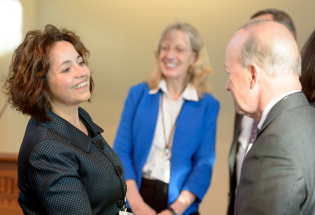
 Hosted by The Royal Society and presented by UIDP, What Industry Wants from Academia brought industry leaders and university representatives together in London on Oct. 8–9 to explore how research partnerships could better address company needs. Company spotlights, a focused discussion on intellectual property, and structured networking highlighted opportunities for academic expertise to contribute across research-intensive sectors. The forum provided opportunities to exchange perspectives, identify shared interests, and explore pathways toward more effective university-industry collaboration.
Need a recap? Access available presentations from What Industry Wants from Academia 2026, and bookmark this page to find new resources as they are added. Presentation materials are available for select sessions and can be downloaded through the blue session title links below. Please note that not all sessions include presentation materials, as this does not represent the event’s full agenda. Presentations were provided by speakers, and their content does not necessarily reflect UIDP policies or positions.
October 8, 2026
Partnering with Novartis: A University Perspective
Simon Youlton, Novartis
Learn how Novartis engages with universities to support scientific advancement and innovation. This discussion explored the company’s approach to external research collaborations, funding priorities, partnership structures, proposal opportunities, and intellectual property management. Attendees gained a better understanding of how Novartis evaluates and supports academic engagement.
Building Research Partnerships with UCB
Martin Procter, UCB
UCB relies on collaboration with external partners to help advance research and address unmet patient needs. In this session, attendees heard about the company’s approach to academic engagement, including strategic partnerships, funding mechanisms, proposal processes, and the factors that contribute to successful university-industry collaborations.
Academic Collaboration at Bristol Myers Squibb
Mike Tobyn, Bristol-Myers Squibb
Bristol Myers Squibb works with universities and research institutions to advance innovation and support scientific discovery. This discussion provided insight into the company’s university engagement strategy, research funding priorities, proposal pathways, intellectual property considerations, and lessons learned from building productive academic partnerships.
Working with BAE Systems: Research, Innovation, and Talent Development
Tony Boarer, BAE Systems
BAE Systems engages universities to advance research, strengthen technical capabilities, and develop future talent. Attendees heard how the company approaches academic partnerships, research investments, proposal opportunities, intellectual property considerations, and collaboration models that support long-term innovation and mission success.
Lockheed Martin’s Approach to University Engagement
Nafiz Karabudak, Lockheed Martin Company
Lockheed Martin collaborates with universities around the world to support research, workforce development, and technology advancement. In this session, attendees learned about the company’s academic partnership strategy, funding priorities, proposal processes, and perspectives on intellectual property and collaborative research.
How Thales Works with Universities
Matt Ball, Thales
Thales collaborates with academic institutions to explore emerging technologies and strengthen innovation ecosystems. This session provided insight into the company’s university engagement strategy, research priorities, collaboration mechanisms, and considerations related to intellectual property and long-term partnership development.
Academic Engagement and Innovation at Babcock
Jim Sibson, Babcock
Babcock partners with universities to support engineering innovation, workforce development, and mission-focused research. Attendees gained insight into how the company approaches external engagement, including partnership structures, funding opportunities, proposal processes, and the characteristics of successful university collaborations.
University Engagement at Johnson & Johnson
Phil Murphy, Johnson & Johnson
Johnson & Johnson collaborates with universities and research institutions to advance scientific innovation, healthcare solutions, and workforce development. In this session, attendees heard how the company approaches academic partnerships, research investments, proposal opportunities, and external engagement strategies. Attendees gained insight into how Johnson & Johnson evaluates collaborations and what the company seeks from its university relationships.
Partnering with Thermo Fisher Scientific
Alexander Makarov, Thermo Fisher Scientific
Thermo Fisher Scientific works with universities across research, technology development, and scientific infrastructure initiatives. This discussion explored the company’s approach to academic engagement, including strategic partnerships, funding priorities, collaboration mechanisms, and lessons learned from successful university-industry relationships. Attendees gained practical insight into how Thermo Fisher Scientific supports and evaluates external collaborations.
Collaborating with Evotec: Opportunities for Academic Engagement
Adam Stoten, Evotec
Evotec works with academic institutions, research organizations, and industry partners to accelerate the translation of scientific discoveries into impactful innovations. Attendees heard how the company approaches university partnerships, research collaboration opportunities, funding priorities, and intellectual property considerations. Attendees gained a better understanding of how Evotec engages the academic community and supports collaborative innovation.
University Collaboration at Arm
Gabriella Giuffrida, Arm Ltd
Arm engages universities worldwide to advance semiconductor research, computing innovation, and workforce development. This discussion provided insight into the company’s academic partnership strategy, collaboration opportunities, research priorities, and lessons learned from working with researchers and institutions across the global innovation ecosystem.
Academic Partnerships and Innovation
Carol Fletcher, BT
BT works with universities to explore emerging technologies, strengthen research capabilities, and address challenges related to connectivity, communications, and digital transformation. Attendees heard how the company approaches academic engagement, including partnership development, proposal opportunities, funding priorities, and intellectual property considerations.
Partnering with Canon: Perspectives on University Engagement
Duncan Simpson, Canon
Canon works with universities to advance research, support technology development, and cultivate future talent. Attendees heard how the company approaches academic collaboration, including strategic partnerships, research funding priorities, proposal pathways, and lessons learned from building productive relationships with universities and researchers.
October 9, 2026
Understanding BASF’s Approach to Academic Partnerships
Christian Holtze, BASF
BASF collaborates with universities and research institutions around the world to advance scientific discovery, develop new materials, and address challenges related to sustainability and industrial innovation. In this session, attendees heard how the company approaches academic engagement, including strategic partnerships, research funding priorities, proposal opportunities, collaboration mechanisms, and intellectual property considerations. Attendees gained insight into how BASF evaluates university partnerships and what the company seeks from its external research investments.
Partnering with Lubrizol: Research, Innovation, and University Engagement
Gary Walker, Lubrizol Corporation
Lubrizol works with universities to advance innovation in specialty chemicals, materials science, and product development. This discussion explored the company’s approach to academic collaboration, including partnership development, funding priorities, proposal pathways, and lessons learned from successful engagements. Attendees gained a better understanding of how universities can align their capabilities with Lubrizol’s innovation objectives.
Academic Collaboration at Syngenta
Jim Morton, Syngenta
Syngenta engages universities and research organizations to support innovation in agriculture, sustainability, and food systems. Attendees heard how the company approaches external research partnerships, evaluates collaboration opportunities, and structures engagement with academic institutions. The discussion provided insight into funding priorities, proposal processes, intellectual property considerations, and the role of university partnerships in advancing agricultural innovation.
University Research Partnerships with the Met Office
George Pankiewicz, Met Office
The Met Office engages universities to advance research related to weather, climate, environmental forecasting, and data science. Attendees heard how the organization approaches academic partnerships, research investments, proposal pathways, and collaborative innovation. Attendees gained a better understanding of how universities can engage with the Met Office and contribute to addressing critical environmental and societal challenges.
